Dog Behavior Training Header
 

Free Dog Training Tips

Even though dogs were domesticated thousands of years ago, man still has a hard time communicating with his best friend and getting him to do what he wants him to do.


Often times, a training session covering dog training basics with a puppy leads one to wonder who the master in the relationship is. Is it the man or the dog?

Communicating with a dog is somewhat similar to communicating with a two-year-old as dogs posses the mentality of a young toddler. Even though dogs are mentally similar to human toddlers, they sense the world around them quite differently. They see in different colors than humans do. Their sense of smell is extremely sensitive and they process information differently than humans. In order to properly train a dog without becoming frustrated, one needs to take these differences into account.
Descendants of wolves, domesticated dogs are natural pack animals. This means that they function best within a “pack” situation that is complete with play and a hierarchy.

Dog Training Tips

It is never too early to begin training your puppy as long as you don’t expect exceptional results starting out. Set aside at least a half hour, an hour if you can spare it, to train your dog. Be sure to conduct daily sessions covering the dog training basics during the first few months of your puppy’s life.

Keep in mind that potty training will require a different strategy and will not be discussed in this article.

It is vital that you display dominance early in the relationship with your puppy. You see, dogs live in a pack with a hierarchical structure. There are dominant dogs and those dogs who defer to the dominant ones. To keep peace in your household, you must become the dominant member of the pack.

Establishing dominance can be easy or difficult depending on your personality, your dog’s personality, and the breed of the dog. You may find the use of training tools such as collars, leashes, commands and other training aides useful, but none will be as useful as your attitude. The number one rule: Never let your dog be the boss.

Displaying dominance does not meant that you have to be physically aggressive or abusive with your dog. In most cases, firmness and your unwillingness to back down until a command is followed is all that is needed.

One good way to establish dominance with your puppy is to place them on their back with your hand firmly planted in the middle of their chest. Hold the position until your dog lowers his paws which is a sign of submission. You can also place your face close to theirs during this exercise as this is another way to display dominance within a pack.

While exercise is a vital part of any dog’s life, you should keep your dog on a short leash during training and while walking him. This will limit his ability to run wild and will force him to defer to your commands. Later, you may be able to allow your dog more freedom on the leash, but only after dog training basics are complete.

In the beginning, you commands should be short and clear. Choose simple, one-word commands such as sit, stay, down and come. Your voice should be firm, never harsh. Remember; you need to be an authority, not an abuser. Try to avoid two word commands such as sit down or stay down. These only confuse dogs as they sound too much alike.

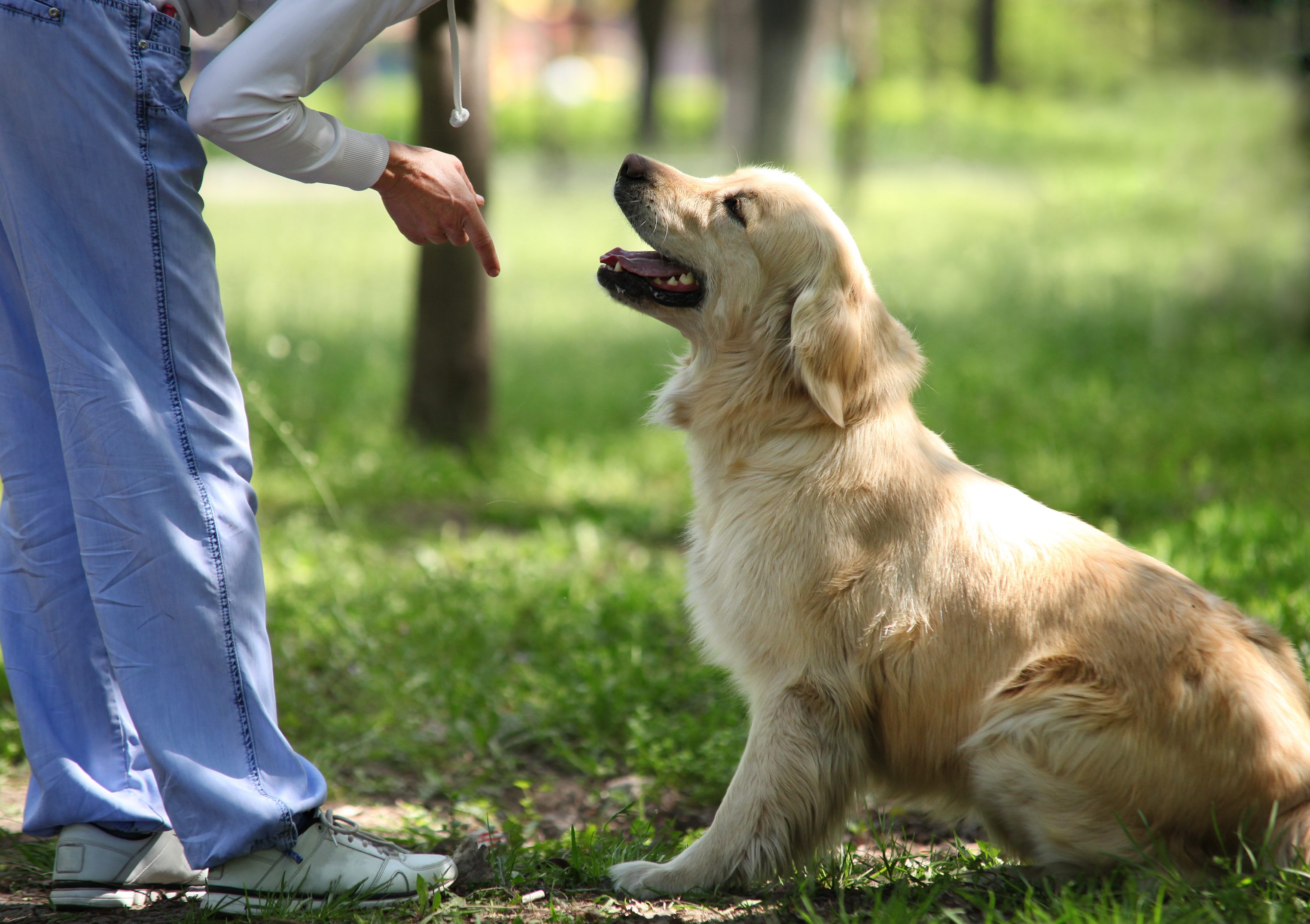
Always accompany your commands with a look or gesture, sign language if you will. Once your dog catches on, you will only have to use a verbal command or a gesture to get your dog to do what you want him to do.

Above all, you need to be consistent with your dog. Always use the same commands and the same gestures so that your dog will not get confused. Avoid using the same command to achieve different results. For example: Don’t use the down command to keep your dog from jumping and also for telling him to lie on the floor.

Be persistent, be consistent and love your dog. In the end you will be rewarded with an obedient dog who is truly man’s best friend.


Dog Behavior Training
 
Show Dog Training
Stop Your Dog From Begging
Teach Your Dog to Come
Teach Your Dog to Sit
Teach Your Dog to Stay
Training Diets
Training Older Dogs
  Training Timid Dogs
   
Articles
   
Copyright 2007 http://www.types-of-dogs.com - Dog Behavior Training
Links
Shop